Bridging the Distance: Telehealth and Rural Healthcare Access
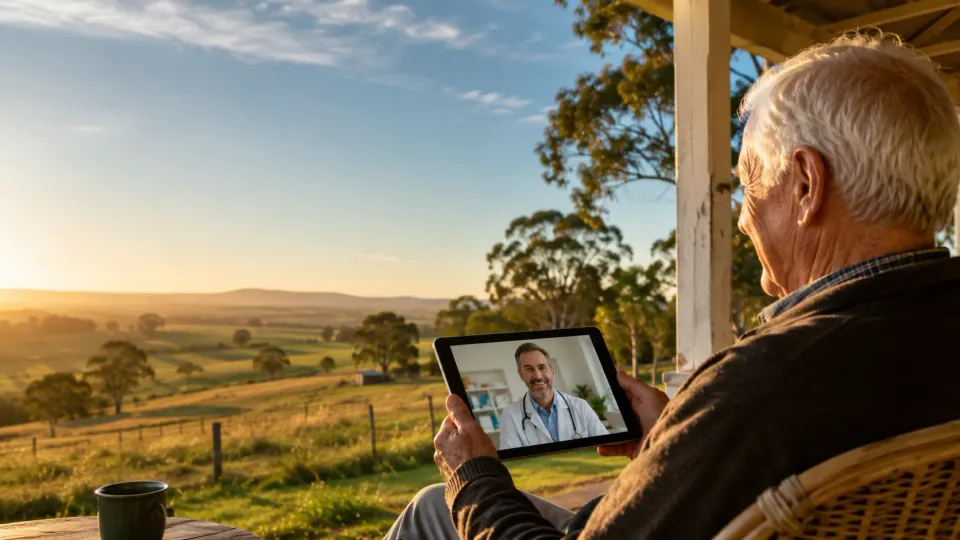
Australia is a remarkable country. We have a strong healthcare system, well-trained clinicians, and consistently good medical outcomes. Yet one of our greatest healthcare challenges has never been the quality of care; it has been providing access to it.
Unlike many countries where large populations are concentrated within relatively small geographic areas, Australia has one of the lowest population densities in the world. While the majority of Australians live within metropolitan centres along the coastline, millions live in regional, rural and remote communities spread across vast distances.
Telehealth has become one of the most significant advances in improving healthcare accessibility across Australia. By allowing appropriate consultations to occur by phone or secure video, telehealth removes many of the traditional barriers associated with receiving medical care. Rather than healthcare being limited by geography, patients can now access qualified clinicians from their home, workplace, or local community.
For many Australians living in metropolitan centres, telehealth offers convenience. For Australians living in regional, rural and remote communities, however, it can offer something far more important: timely access to healthcare that may otherwise require hours of travel or lengthy waits for the next available appointment. In a country as geographically dispersed as Australia, telehealth is not simply a technological innovation; it is helping redefine how healthcare is delivered.
Closing the Gap in Rural Healthcare Access
Australia’s rural communities continue to experience significant shortages of general practitioners and other healthcare professionals. For decades, geography has been one of Australia’s greatest barriers to equitable healthcare delivery. Telehealth is helping change that. Despite representing a substantial proportion of our population, these communities are often serviced by comparatively fewer clinicians than metropolitan areas. As a result, access to timely healthcare has remained an ongoing challenge for decades.
For patients, this can have real consequences. A persistent cough may remain untreated. A skin condition may gradually worsen. Migraines may become more frequent before medical advice is sought. A urinary tract infection that could have been managed promptly may instead progress over several days. In many cases, it is not that people choose not to seek care; it is that accessing care can be difficult.
This is where telehealth has begun to reshape healthcare delivery. Many rural Australians no longer need to delay seeking medical advice while waiting for an opportunity to travel or secure an appointment. Telehealth enables clinicians to assess many common conditions early, provide treatment where appropriate, and identify patients who require face-to-face assessment, pathology, imaging, or emergency care.
This approach benefits not only patients, but also rural general practitioners. By managing appropriate lower-complexity presentations remotely, telehealth enables local GPs to devote more time to patients requiring physical examination, procedural care, or ongoing management of complex conditions. When face-to-face assessment is required, telehealth can facilitate earlier referral with a documented clinical history and, where appropriate, investigations already underway. Rather than replacing the local GP, telehealth strengthens the broader healthcare system by supporting more coordinated and efficient patient care.
The impact extends beyond convenience. Earlier access to healthcare means patients can receive reassurance when their condition is minor, treatment when intervention is required, or prompt referral when symptoms suggest something more serious. In healthcare, timely assessment is often just as important as the treatment itself.
Bringing Healthcare Closer to Rural Australians
By removing the need to travel for appropriate consultations, telehealth allows many patients to speak with a qualified clinician from their home, workplace, or local community. Conditions such as influenza, uncomplicated urinary tract infections, migraines, repeat prescriptions, medication reviews, mild skin conditions, hay fever, conjunctivitis, and many upper respiratory infections can often be assessed safely through telehealth when supported by appropriate clinical governance and clear escalation pathways.
Importantly, telehealth does not replace traditional healthcare. Rather, it complements it.
Patients who require physical examination, imaging, pathology, emergency care, or procedural treatment continue to benefit from face-to-face healthcare. However, for many lower-complexity presentations, telehealth removes unnecessary barriers while ensuring patients still receive timely clinical advice.
This is particularly valuable in regional Australia. A patient who previously may have delayed seeking advice because of distance, travel time, or work commitments can now access medical care much earlier in the course of their illness. Earlier access to healthcare allows patients to receive timely clinical assessment, appropriate treatment where indicated, reassurance when their condition is minor, and prompt referral when symptoms suggest more serious disease.
Benefits Beyond Individual Patients
Every consultation safely managed through telehealth helps improve the efficiency of the broader healthcare system. It increases appointment availability within general practice, reduces unnecessary travel, and allows clinicians to direct face-to-face services towards patients who genuinely require in-person assessment. In rural communities where healthcare resources are limited, these efficiencies become even more important.
Technology has undoubtedly changed the way healthcare is delivered, but the true value of telehealth is not the technology itself. Its greatest achievement is that it has brought healthcare closer to people who have historically found it more difficult to access.
For a country as geographically vast as Australia, that represents more than innovation. It represents a meaningful step towards improving equity of healthcare access.
As telehealth continues to evolve alongside traditional healthcare, its role should not be measured simply by the number of consultations conducted online. Its success should be measured by something far more important: the number of Australians who are now able to access timely, safe, and appropriate healthcare, regardless of where they live.
Every Australian deserves timely access to safe, high-quality healthcare. While geography will always be one of the defining characteristics of our country, it should no longer define a person’s ability to seek medical advice. Telehealth is helping ensure that where a person lives becomes less important than the care they need.
References
- Australian Bureau of Statistics. Regional Population. Canberra: ABS.
- Australian Institute of Health and Welfare. Rural and Remote Health. Canberra: AIHW.
- Australian Government Department of Health. Modified Monash Model and Distribution of the Medical Workforce.
- Royal Australian College of General Practitioners. Health of the Nation Report.
- Australian Institute of Health and Welfare. Australia’s Health.
- Fisher K, Davey AR, Magin P. Telehealth for Australian general practice: The present and the future. Aust J Gen Pract. 2022 Aug;51(8):589-593. doi:10.31128/AJGP-11-21-6229.
Individual results vary based on your circumstances and clinical needs. Telehealth is not suitable for all health concerns. Your practitioner may recommend in-person assessment, urgent care, GP review, specialist referral, further investigation or no treatment depending on your circumstances.
If you would like to speak with a qualified clinician from home, check your suitability here and find out whether Velora HealthConnect is the right fit for you.
Luke McPherson
Director of Clinical Operations